
Traditions
What is cupping therapy? The marks, claims and evidence
Those round purple circles made cupping famous. The federal research file behind them lists 0 proven conditions and 5 documented side effects — far thinner than the photographs suggest, which is why we treat cupping as an add-on inside a massage of 60 minutes rather than a treatment in its own right.
The short answer
Cupping seals a cup to the skin and creates suction, pulling blood toward the surface — that pull is what leaves the round marks. There are 2 forms: dry, which keeps skin intact, and wet, which pierces it. NCCIH's fact sheet lists 0 proven benefits but 5 documented side effects, so treat it as low-evidence comfort care — at our studio it comes inside a 60 minute Signature massage rather than sold on its own.
- dry cupping keeps skin intact; wet cupping pierces it
- 2 forms
- cups come in glass, ceramic, bamboo or plastic
- 4 materials
- listed as proven on NCCIH's cupping fact sheet
- 0 conditions
- cited on that fact sheet as showing it works
- 0 trials
- discoloration, scars, burns, infections, eczema or psoriasis flares
- 5 side effects
- rare: bleeding inside the skull; anemia from blood loss
- 2 severe events
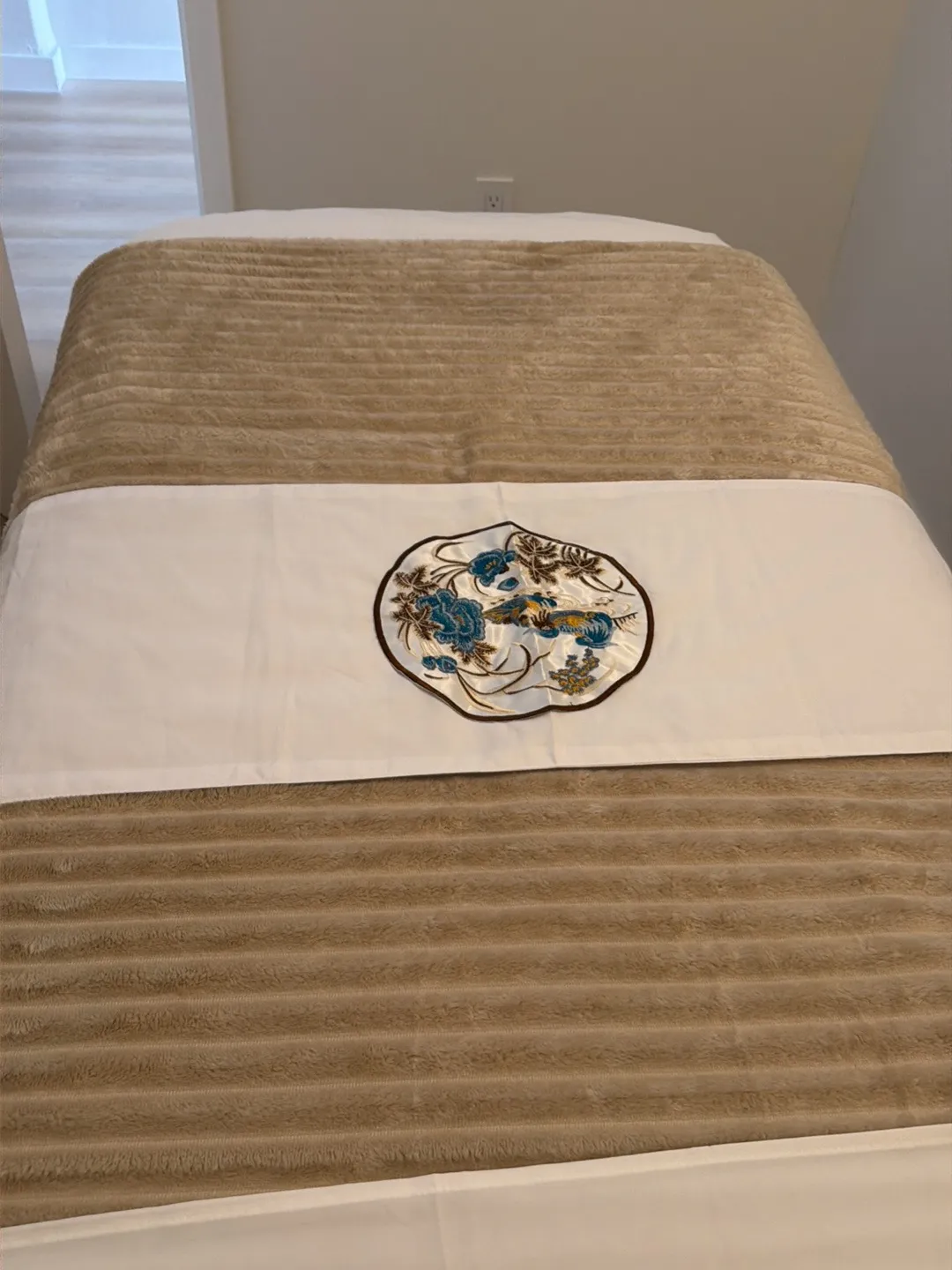
The photograph and the fact sheet
The marks are the whole story. A swimmer climbs out of the pool with a row of dark purple circles down his shoulders, the photo goes everywhere, and cupping gets described as ancient, powerful, detoxifying, and proven. Now look at what the National Center for Complementary and Integrative Health publishes about it. NCCIH is the federal agency that studies practices exactly like this one, and its cupping fact sheet spends almost no space on benefits. Most of it is about safety: 5 documented side effects, 2 rare but severe reported events, and 1 blunt warning about equipment shared between clients. The fact sheet lists 0 conditions cupping treats and cites 0 trials showing it works. Set that against the 2 forms of the practice and the 4 materials the cups are made from, and you have almost the whole federal file. That absence is worth sitting with before you book anything.
So — what is cupping therapy, actually? What follows is a plain account of what the practice involves, why it leaves those circles, and what the published science does and does not support.
What cupping is and how the suction works
Strip away the marketing and the question “what is cupping therapy” has a mechanical answer. Cupping is a practice used in traditional medicine in several parts of the world, including China and the Middle East, according to NCCIH. A practitioner places a cup — made of 1 of 4 materials: glass, ceramic, bamboo, or plastic — on your skin and creates suction inside it. There are 2 ways to do that. The older method applies a flame to the cup to remove oxygen, then presses the cup to the skin; as the trapped air cools and contracts, the negative pressure pulls skin and surface tissue up into the cup. The newer method skips the fire and attaches a suction device to the cup after it is in place.
The suction is the point. A massage therapist pushes down into tissue. Cupping pulls it up and out, and that pull is what draws blood toward the surface. The pooled blood under your skin is what you are looking at when you see the marks.
Dry versus wet — and why you get the circles
The most important distinction between the 2 forms is whether the skin stays intact, and NCCIH draws the line in 1 sentence: in wet cupping, the skin is pierced and blood flows into the cup; dry cupping does not involve piercing the skin.
That is a bigger gap than it sounds. Dry cupping leaves a bruise. Wet cupping is, by design, a procedure that opens the skin and deliberately draws blood, which moves the risk from “discoloration” to “open wound.” Those are not the same conversation. If you are booking a session and the practitioner can't tell you plainly which one they do, settle that question first.
As for the circles themselves: they are not bruises from impact, and they are not “toxins” being pulled to the surface, whatever the marketing says. Suction inside the cup ruptures tiny blood vessels just under the skin, and blood leaks into the surrounding tissue. The result is a flat, round patch of discoloration — red, purple, sometimes nearly black — that traces the rim of the cup. Same biology as a bruise, produced by negative pressure instead of a blow.
The marks are temporary, but NCCIH makes 1 practical point about them that is easy to overlook: their origin should be explained to your health care providers so the round patches aren't mistaken for signs of physical abuse. That is not a hypothetical. A clinician who sees symmetrical circular marks on someone's back without any context has reason to ask hard questions. Mention the cupping up front and you spare everyone the detour.
What the evidence actually shows
Here is the part the photographs skip. NCCIH's cupping fact sheet lists no conditions the practice treats and cites no trials demonstrating that it works. The benefits section is, in effect, missing. When a research body that exists to evaluate complementary practices declines to make any benefit claim, that silence is itself a finding.
The surrounding context comes from how NCCIH treats traditional Chinese medicine as a whole, and the agency is consistently cautious. On Chinese herbal products it says flatly that because many studies have been of poor quality, no firm conclusions can be made about their effectiveness. That hedging is not for lack of looking; the agency notes that Chinese herbal products have been studied for 4 problem areas — stroke, heart disease, mental disorders, and respiratory illnesses such as bronchitis and the common cold. The studies exist. They just aren't good enough to draw a conclusion from.
On acupuncture — a far more heavily studied TCM practice than cupping — the picture is genuinely mixed. Some trials find real acupuncture and sham acupuncture equally effective, which points to a placebo effect. Other studies suggest real acupuncture may help with 4 kinds of often-chronic pain — low-back pain, neck pain, osteoarthritis and knee pain, and carpal tunnel syndrome — and may help on 2 headache fronts, reducing the frequency of tension headaches and helping prevent migraines; our guide to complementary approaches to chronic pain walks through that evidence in detail. That is the texture of TCM evidence in general: frequent placebo signals, and modest, hedged findings where benefits do show up — 6 named conditions for acupuncture against 0 for cupping.
One more thing about acupuncture is worth borrowing here, because it shows what an actual mechanism looks like. NCCIH names 2 effects studies point to: acupuncture stimulates the release of the body's natural painkillers, and it affects brain areas involved in processing pain. You can argue about how much that explains, but it is a testable claim with research attached. Cupping's pull-the-blood-to-the-surface story has 0 comparable mechanism findings in the agency's fact sheet, which is part of why cupping sits well below acupuncture on the evidence scale, with far less rigorous study behind it.
So, on the question of what is cupping therapy actually doing, the honest reading is neither “cupping has been shown to work” nor “cupping has been shown to be useless.” It is that the high-quality evidence needed to say either is largely missing. Whatever relief a session brings may owe a good deal to expectation, attention, and the plain comfort of lying still while someone tends to your back. That is a real effect for the person feeling it. It is just not the same thing as a proven physiological treatment, and the difference is worth keeping straight.
When a research body that exists to evaluate complementary practices declines to make any benefit claim, that silence is itself a finding.
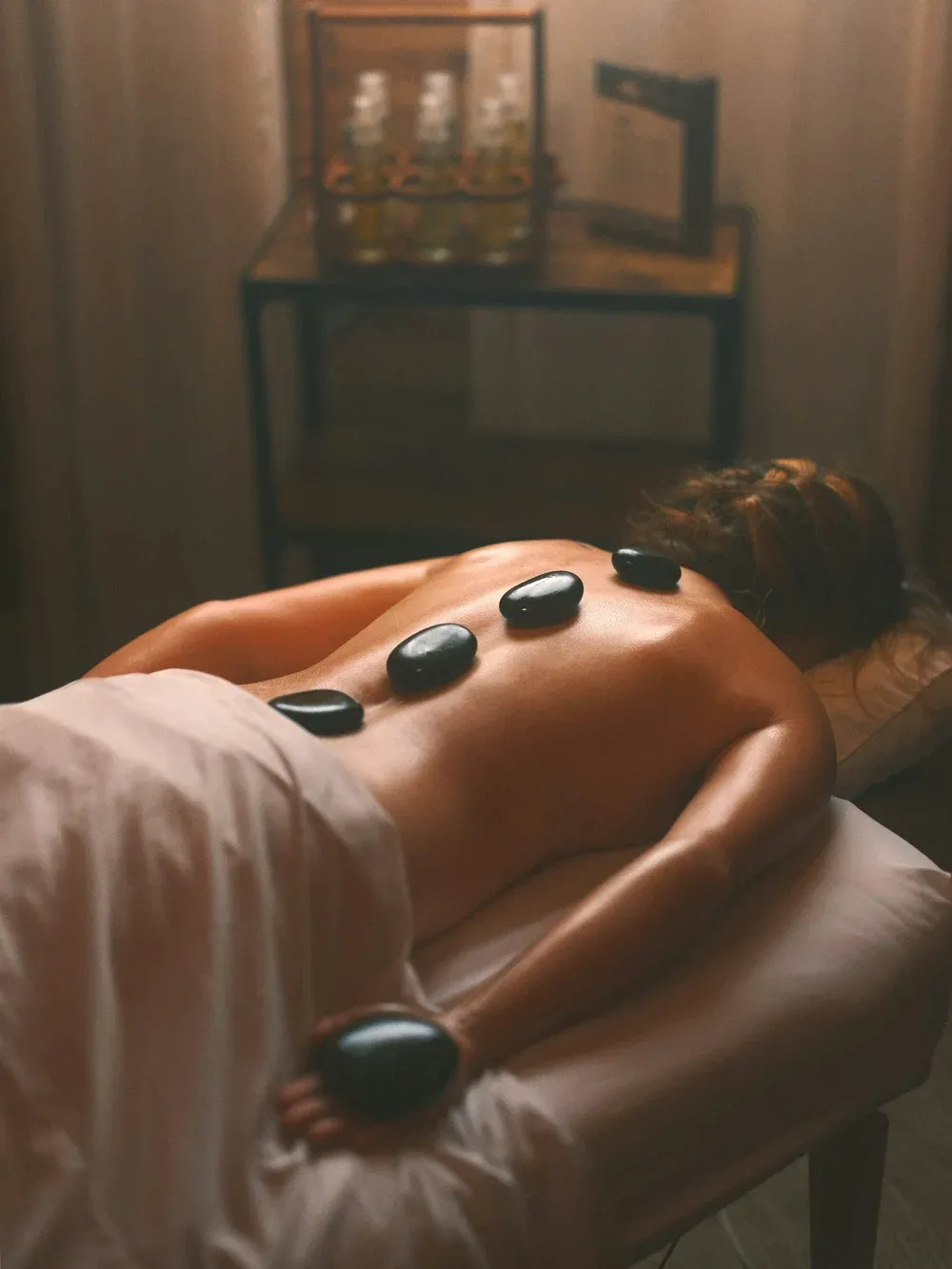
The risks are concrete, and some are serious
This is where cupping stops being vague. NCCIH lists side effects that are documented harms, not cosmetic annoyances — 5 in all. Cupping can cause persistent skin discoloration, scars, burns, and infections, and it can make eczema or psoriasis worse — 4 direct harms plus 1 flare risk for existing skin conditions. Burns, 1 of those 5, trace straight back to the fire method; an open flame near skin to create suction carries an obvious hazard, and “burns” is on the agency's list for a reason. Discoloration that doesn't fade and outright scarring are also on the record, which cuts against the idea that the marks are always harmless and brief.
Then there are the 2 rare but severe cases NCCIH flags. Bleeding inside the skull has been reported after cupping on the scalp. Anemia from blood loss has been reported after repeated wet cupping, a direct consequence of drawing blood session after session. These are uncommon. They are also real reported events rather than theoretical worries, and they cluster around the more aggressive forms of the practice.
The infection risk earns its own line. Cupping equipment can become contaminated with blood — intentionally in wet cupping, inadvertently in dry cupping — and using the same equipment on more than 1 person without sterilizing it between patients can spread bloodborne diseases — NCCIH names 2, hepatitis B and C. Note that dry cupping made that list too: suction alone breaks enough surface vessels to leave blood on the gear.
Single-use or properly sterilized equipment is not an upsell. It is the line between a treatment and a transmission route.
Why “thousands of years old” doesn't settle anything
Cupping is usually presented inside traditional Chinese medicine, which NCCIH describes as a system that has evolved over thousands of years and uses psychological and physical approaches such as acupuncture and tai chi, along with herbal products, to address health problems. Longevity gets offered as proof on its own. Long use is treated as evidence that something works.
It isn't, and the TCM record shows exactly why. Line up 4 practices from the same tradition and they have fared very differently under modern testing. Tai chi comes out reasonably well: NCCIH points to 3 findings — research suggesting it may improve balance and stability in older people and those with Parkinson's disease, reduce pain from knee osteoarthritis, and help people cope with fibromyalgia and back pain. Acupuncture lands in the mixed middle described above, with 6 named conditions and a persistent placebo signal. Chinese herbal products, despite centuries of use and 4 problem areas studied, stay unproven because the studies are weak. Cupping brings up the rear at 0. Same tradition, same age behind each practice, sharply different evidence in front of each one. Age tells you a practice is durable and culturally rooted. It does not tell you it is effective, and cupping has to clear the evidence bar on its own.
Long use is no guarantee of safety either, and NCCIH's notes on Chinese herbal products make the point bluntly. Reviews have found some of those products contaminated across 5 categories: undeclared plant or animal material; drugs, including 2 named by the agency — the blood-thinner warfarin and the anti-inflammatory diclofenac; 3 heavy metals, arsenic, lead, and cadmium; pesticides or sulfites; and, in some products, the wrong herbs entirely, a few of which have caused organ damage. Those are problems with the modern supply chain rather than the ancient idea, but they show how a centuries-old label can sit on top of a product nobody has actually verified. The same skepticism belongs at the cupping table: tradition explains where the practice came from, not what it does to you now.
The safety lesson from TCM carries over, too. NCCIH stresses that training and proper technique matter: for acupuncture, complications have come from nonsterile needles and improper delivery, and the agency names 4 of them: infections, punctured organs, collapsed lungs, and injury to the central nervous system. Acupuncture also has 1 established credential — certification from the National Certification Commission for Acupuncture and Oriental Medicine — that most U.S. states require. Cupping carries 0 equivalents in the agency's guidance, which leaves more of the vetting to you.
| TCM practice | What NCCIH reports |
|---|---|
| Tai chi | May improve balance and stability in older people and those with Parkinson's disease, reduce knee-osteoarthritis pain, and help people cope with fibromyalgia and back pain. |
| Acupuncture | Mixed: may help chronic pain (low-back, neck, osteoarthritis/knee, carpal tunnel) and headaches — but some trials find sham acupuncture works equally well. |
| Chinese herbal products | Studied for stroke, heart disease, mental disorders and respiratory illness, but studies are of poor quality — no firm conclusions. |
| Cupping | No conditions listed as proven; the fact sheet is almost entirely mechanism and safety. |
Setting realistic expectations before you book
If you arrived here asking what is cupping therapy and whether it's worth booking, the practical answer is to treat it as a low-evidence comfort practice rather than a medical treatment — then the decisions get simpler. The checklist below runs in order, 5 steps, and every line of it comes straight from the 5 side effects and 2 severe events on the safety record above. If you'd rather talk it through in person first, contact the studio and ask how cupping is added to a session before you book; during the Grand Opening special it is an optional, no-charge part of the Signature Massage, which runs 45 to 120 minutes from $89.
And one boundary that NCCIH attaches to TCM broadly applies here in full: don't let cupping replace or delay conventional care for a real condition. If you take medication, are pregnant, have a skin condition, or bruise or bleed easily, talk it through with your own clinician before trying cupping.
- Decide dry or wet before anything else. Choosing wet means choosing a procedure that breaks your skin and carries the heavier risks: bloodborne infection, scarring, and, with repetition, blood loss.
- Then ask about the equipment. Single-use, or sterilized between clients? On dry cupping as much as wet, that answer is what protects you.
- Check your skin next. If you have eczema or psoriasis, expect possible flares.
- Rule out scalp suction when you book. Bleeding inside the skull after cupping on the scalp is rare but on the record.
- After the session, expect the marks. They are the normal result of the suction — and mention them to any clinician who sees them so they aren't misread.
Questions people ask
What is cupping therapy?
Cupping places a glass, ceramic, bamboo or plastic cup on the skin and creates suction inside it — either by briefly heating the cup with a flame or by attaching a pump. The negative pressure pulls skin and surface tissue upward and draws blood toward the surface. It is used in traditional medicine in several parts of the world, including China and the Middle East.
Why does cupping leave round marks?
Suction ruptures tiny blood vessels just under the skin and blood leaks into the surrounding tissue — the same biology as a bruise, produced by negative pressure instead of a blow. The marks are temporary. NCCIH advises explaining them to your health care providers so they aren't mistaken for signs of physical abuse.
Does cupping actually work?
The honest answer is that high-quality evidence is largely missing. NCCIH's cupping fact sheet lists no conditions the practice treats and cites no trials showing it works. Whatever relief a session brings may owe a good deal to expectation, attention and the comfort of the ritual — real for the person feeling it, but not the same as a proven physiological treatment.
What's the difference between dry and wet cupping?
Dry cupping keeps the skin intact and leaves a bruise-like mark. In wet cupping the practitioner pierces the skin and blood flows into the cup — an open-skin procedure with heavier risks: bloodborne infection, scarring and, with repeated sessions, anemia from blood loss. Ask which one a practitioner does before you book.
Is cupping safe?
It carries documented risks: persistent skin discoloration, scars, burns, infections, and flares of eczema or psoriasis. Rare but serious events include bleeding inside the skull after scalp cupping and anemia after repeated wet cupping. The key protection is equipment that is single-use or sterilized between clients, since contaminated gear can spread hepatitis B and C.
Sources
Written and fact-checked by the Harbor Wellness editorial team against the primary sources above. Sessions at our San Carlos studio are performed by experienced massage therapists, all of them fully CAMTC-certified and licensed by the California Massage Therapy Council.
This guide is for general education only and is not medical advice. Talk with your healthcare provider about what is right for you.
Curious what cupping feels like?
In San Carlos? We can help you put this into practice.
Our Signature Massage runs 45 to 120 minutes — a 60 minute session is $119 — and during the Grand Opening special, select services include complimentary cupping alongside hot stones and hot compress. It's a low-commitment way to experience the suction and the marks for yourself; just tell your therapist it's your first time, or skip it if you change your mind.
Harbor Wellness Massage · 1658 El Camino Real, San Carlos, CA 94070 · (650) 622-8666 · Open daily 10 AM – 9 PM.
Keep reading
Tui na, acupressure and TCM bodywork
Where the hands-on side of TCM stands after the trials — same honest yardstick.
Read
Massage for back pain, honestly
What the research actually supports when your lower back is the problem.
Read
Signature Massage — cupping optional, at no charge
45 to 120 minutes, from $89; the Grand Opening special adds complimentary cupping.
Read