
The Harbor Journal
Massage Wellness Guides, Backed by Evidence
Consider this the front door to our massage wellness guides: 10 articles, each built from published research instead of spa marketing. Every claim traces back to a named source, including NCCIH, Mayo Clinic, AMTA and NINDS, and each piece takes 8 to 10 minutes to read. No miracle cures. Just what the evidence shows, what it doesn't, and how to use that when you book a session.
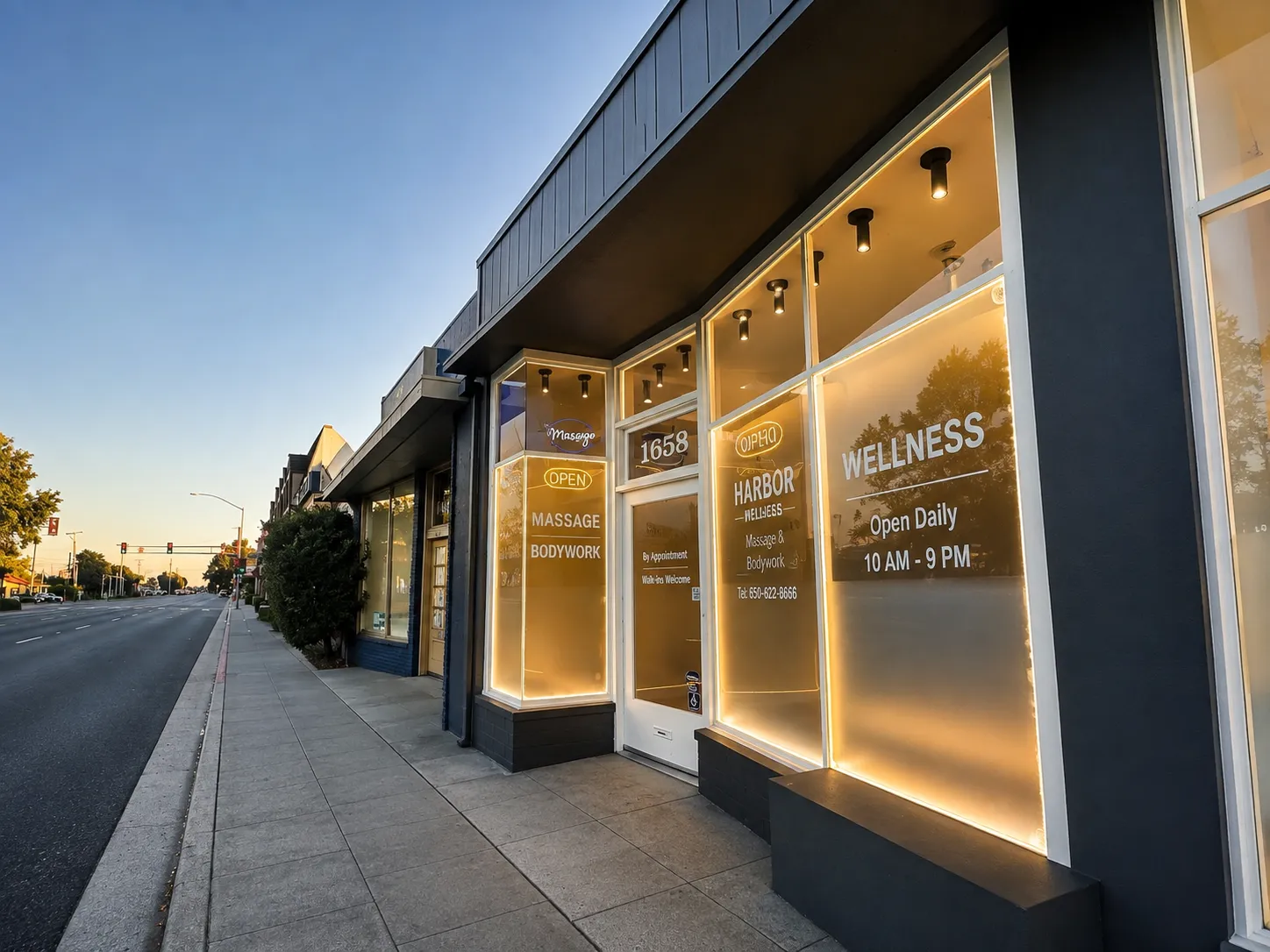
The guides are written and published by Harbor Wellness Massage at 1658 El Camino Real, San Carlos, CA 94070. Call (650) 622-8666, or stop by any day between 10 AM and 9 PM.
Featured guide
Start with this one
New to the series? This is the guide we hand people first. All 10 massage wellness guides are written and published by Harbor Wellness Massage at 1658 El Camino Real, San Carlos, CA 94070 — call (650) 622-8666 or stop by any day between 10 AM and 9 PM, where a Signature massage runs $89 for 45 minutes and $119 for 60 minutes.
Evidence Check
Does massage help back pain? What the studies show
Twenty-five studies, 3,096 patients, one honest answer: the relief is real, modest, and mostly short-term. Here is what the research actually supports for back and neck pain — and how long a session has to run.
8 min read Read the guide
The full series
Browse all 10 guides
The rest of the series covers pain, stress and sleep, traditional Chinese bodywork like tui na and cupping, special situations such as pregnancy and cancer care, and the practical question of how to pick a therapist in the first place. All 10 massage wellness guides follow the same shape: a short answer up top, sourced sections below, and a plain summary of where the research is strong and where it's thin.
Living With Pain
Massage for chronic pain: where it actually fits
One in five American adults lives with chronic pain, and for 7.4 percent it limits daily life most days. The evidence for massage is thinner than most people assume — and more specific about when it helps.
8 min read Read
Evidence Check
Massage for stress and anxiety: what it can and cannot do
A 37-study meta-analysis says massage reliably calms your body for about 60 minutes. What it says beyond that hour is more complicated — and more interesting.
8 min read Read
Evidence Check
Massage for sleep: does it actually help?
The trials are genuinely mixed: 60 minutes on the table clearly calms a body that won't settle, but direct proof it deepens sleep is thin. Here is where the evidence actually lands.
8 min read Read
Traditions
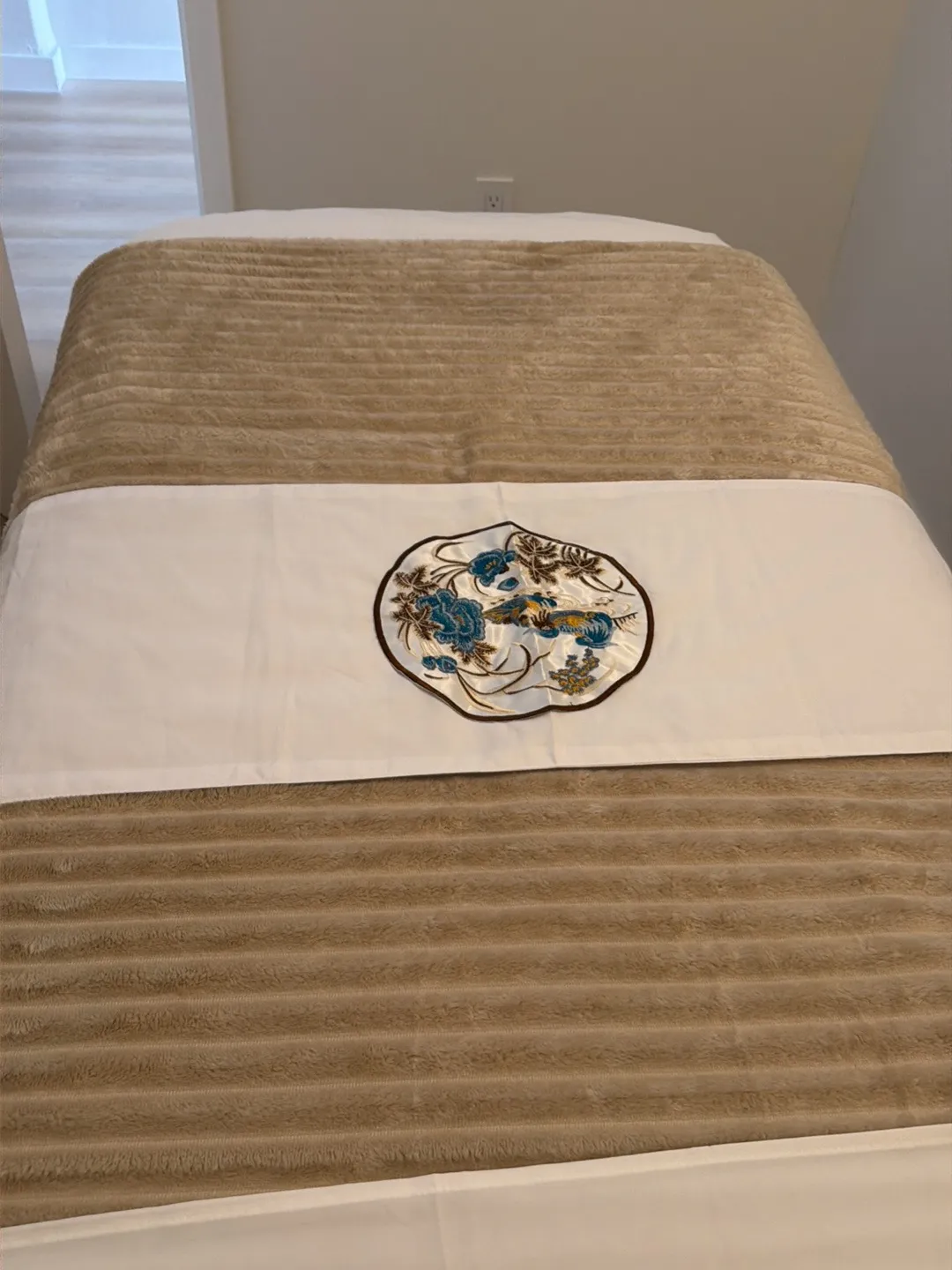
What is cupping therapy? The marks, claims and evidence
Those round purple circles made cupping famous. The federal research file behind them lists 0 proven conditions and 5 documented side effects — far thinner than the photographs suggest, which is why we treat cupping as an add-on inside a massage of 60 minutes rather than a treatment in its own right.
8 min read Read
Traditions
Tui na massage benefits: what the evidence says
Tui na, acupressure and cupping are the 3 hands-on corners of traditional Chinese medicine, and most people meet them inside a massage of 60 minutes rather than in a clinic. Here is what the research supports, what it borrows from acupuncture's 4 chronic-pain findings, and what it can't yet say.
8 min read Read
Self-Care
Tension headache relief: what actually works
The interventions with the best track record sound too dull to matter: steady sleep, real meals, water, sane caffeine — and knowing when the painkillers themselves become the problem.
9 min read Read
Special Care
Massage during cancer treatment: comfort, with caution
Trials hint that massage eases mood, pain and sleep during cancer care — weakly. The real difference is a therapist who knows exactly what to avoid.
8 min read Read
Self-Care
Relaxation techniques that hold up between massages
The calm from a good massage tends to fade on the drive home — 60 minutes on the table buys you an hour, not a habit. The relaxation response is the part you can practice without an appointment: here is what the evidence supports, and where it is thinner than the headlines.
8 min read Read
Smart Shopper
How to choose a massage therapist without getting burned
A star rating is a thin basis for choosing the person who will spend 60 minutes with their hands on your spine. Confirm the credential, loop in your own doctor, and ask a few pointed questions before you lie down on the table.
8 min read Read
| Guide | The question it answers | Minutes |
|---|---|---|
| Does massage help back pain? What the studies show | “does massage help back pain” | 8 |
| Massage for chronic pain: where it actually fits | “massage for chronic pain” | 8 |
| Massage for stress and anxiety: what it can and cannot do | “massage for stress and anxiety” | 8 |
| Massage for sleep: does it actually help? | “massage for sleep” | 8 |
| What is cupping therapy? The marks, claims and evidence | “what is cupping therapy” | 8 |
| Tui na massage benefits: what the evidence says | “tui na massage benefits” | 8 |
| Tension headache relief: what actually works | “tension headache relief” | 9 |
| Massage during cancer treatment: comfort, with caution | “massage during cancer treatment” | 8 |
| Relaxation techniques that hold up between massages | “relaxation techniques” | 8 |
| How to choose a massage therapist without getting burned | “how to choose a massage therapist” | 8 |
How to read them
How do you get the most out of a guide?
-
Start with the question you actually have
Every guide leads with a short answer in plain language. Read that first; if it settles the question, you're done in 40 seconds.
-
Check the numbers against the claim
Study counts, sample sizes and dates sit in the stat strip and the tables. Where the evidence is thin, the article says so instead of dressing it up.
-
Bring it to your session
Tell your therapist what you read and what you want out of the hour. A 60 minute session tuned to a specific complaint beats a generic one.
Our editorial standard
Why we publish these
Most spa blogs read like advertising. We'd rather tell you what the evidence actually shows, because massage doesn't need overselling; modest, honest findings are still good reasons to get on the table. So the massage wellness guides here are sourced — most often to the NCCIH's massage therapy overview and Mayo Clinic's relaxation-technique guidance, and to the NIH's own digest of what the science says about massage — hedged where the research is thin, and free of miracle claims. When a study is small, we say so. When results are mixed, you'll read that too.
Two caveats, stated plainly. None of this is medical advice. These are general-education articles, and your physician knows your situation better than any web page. And yes, we run a massage studio, so read us the way you'd read any practitioner writing about their own field. For the record: all our therapists are fully CAMTC-certified and licensed by the California Massage Therapy Council.
Before you dive in
Questions about these guides
How are these guides sourced?
Every claim traces to a named public source — NCCIH, Mayo Clinic, AMTA, NINDS or peer-reviewed research — and each article lists its sources at the end. When a study is small or results are mixed, the text says so instead of rounding up.
Is this medical advice?
No. These are general-education articles, not diagnosis or treatment advice. If you have a medical condition, a recent injury, or you're pregnant, talk with your physician before booking any massage.
How often are guides updated?
Each article carries a published date and a last-reviewed date, and we revise a guide when the evidence it cites changes — not on a fixed schedule.
Which guide should I read first?
If something hurts, start with the back-pain or chronic-pain guide. If you're sleeping badly or running hot on stress, start with the sleep or stress guide. If you've never booked a massage anywhere, read the one on choosing a therapist first — it covers the questions worth asking before you hand over a credit card.
Do I have to book at Harbor Wellness to use these?
No. The guides are written to be useful wherever you get a massage. If you are in San Carlos, our menu runs $89 for 45 minutes and $109 for 60 minutes at 1658 El Camino Real, open daily 10 AM to 9 PM — but nothing in these articles depends on booking with us.
The practical half
Treatment and neighbourhood pages
The guides above are about the evidence — what massage may help with, what it will not, and where the research is thin. These pages are about the appointment: what each treatment costs, how long it runs, who it suits, and what the drive looks like from the next town over. Prices are the same ones on our Square booking page, and every session runs at 1658 El Camino Real, open 10 AM to 9 PM.
By treatment
-
Massage open late San Carlos: the last 60 minute start is 8 PM
Open every day, 10 AM to 9 PM. The same price at 8 PM as at 11 AM.
-
Deep tissue massage in San Carlos: how firm to go, and how long to book
Deep Tissue Massage has its own line on our Square menu, from $89. Here is how to ask for the pressure you want once you are on the table.
-
Couples massage in San Carlos: two tables, two therapists, one price
Two people, two tables, one private room, from $189. Four Hands Massage costs the same and does something different.
-
Lymphatic drainage massage in San Carlos: light pressure, from $129
Very light strokes, not deep tissue. Four options from $129, and a list of people who should ask a clinician first.
-
Prenatal massage in San Carlos: side-lying, from $119
Ask your doctor or midwife first. Then here is the position, the pressure and the price.
-
The best facial in San Carlos, if lymphatic is what you want
We do not book facials on their own. The lymphatic facial comes attached to massage or drainage, from $189.
-
Facial spa near Redwood City: 60 minutes of massage, then the facial
The facial here is lymphatic and comes attached to bodywork. One appointment in San Carlos, a few minutes up El Camino Real, from $189.
-
Facial spa near San Mateo: 60 minutes of drainage, then the face
The lymphatic facial here is the back half of a full-body session. 90 minutes for $189, about 10 minutes down El Camino Real.
-
Top Rated Thai Massage in San Carlos, CA
Assisted stretching and rhythmic pressure from a CAMTC-certified therapist at 1658 El Camino Real. Book 45, 60 or 90 minutes, from $99.
By where you are coming from
From reading to the table
Book a massage in San Carlos
When you're ready to put a guide into practice, we're close by. Harbor Wellness Massage offers 11 services from $89 at 1658 El Camino Real, open every day 10 AM to 9 PM. Online booking through Square takes about a minute, or call (650) 622-8666 and we'll find you a time.